For a long time, biophilic design was almost synonymous with bringing greenery into the home: planters, vertical gardens, skylights. And all of this remains incredibly important. Even so, it's no longer enough. The concept has grown, matured, and, above all, gained new forms of expression.
Architects and designers no longer want just plants in indoor spaces. They seek to translate atmospheres, textures, and even natural rhythms into materials that seem to breathe with the space. Thus, biophilia has gone from being just green to becoming a language.
That's where crystals come in. Bonsai Crystal, Botanic Crystal, Camellot and Vivaldi don't follow the cliché that biophilia is only about greenery. On the contrary, they broaden the conversation, bringing light, geology, and mineral time into the project.
Biophilia of the present: well-being and regeneration
In recent years, terms like wellness design, neuroarchitecture, and regenerative design have gained traction worldwide. Indeed, being in contact with nature is no longer a luxury; it has become a necessity linked to mental health, productivity, and quality of life.
Today, both clients and professionals want spaces that convey calm, focus, and vitality, not just functionality. Materials that evoke nature stand out in this scenario. That's why crystals make a difference: they connect the eye to the earth and create sensory experiences that leave a lasting impression.
Four crystals, four narratives
Bonsai Crystal: minimalist contemplation
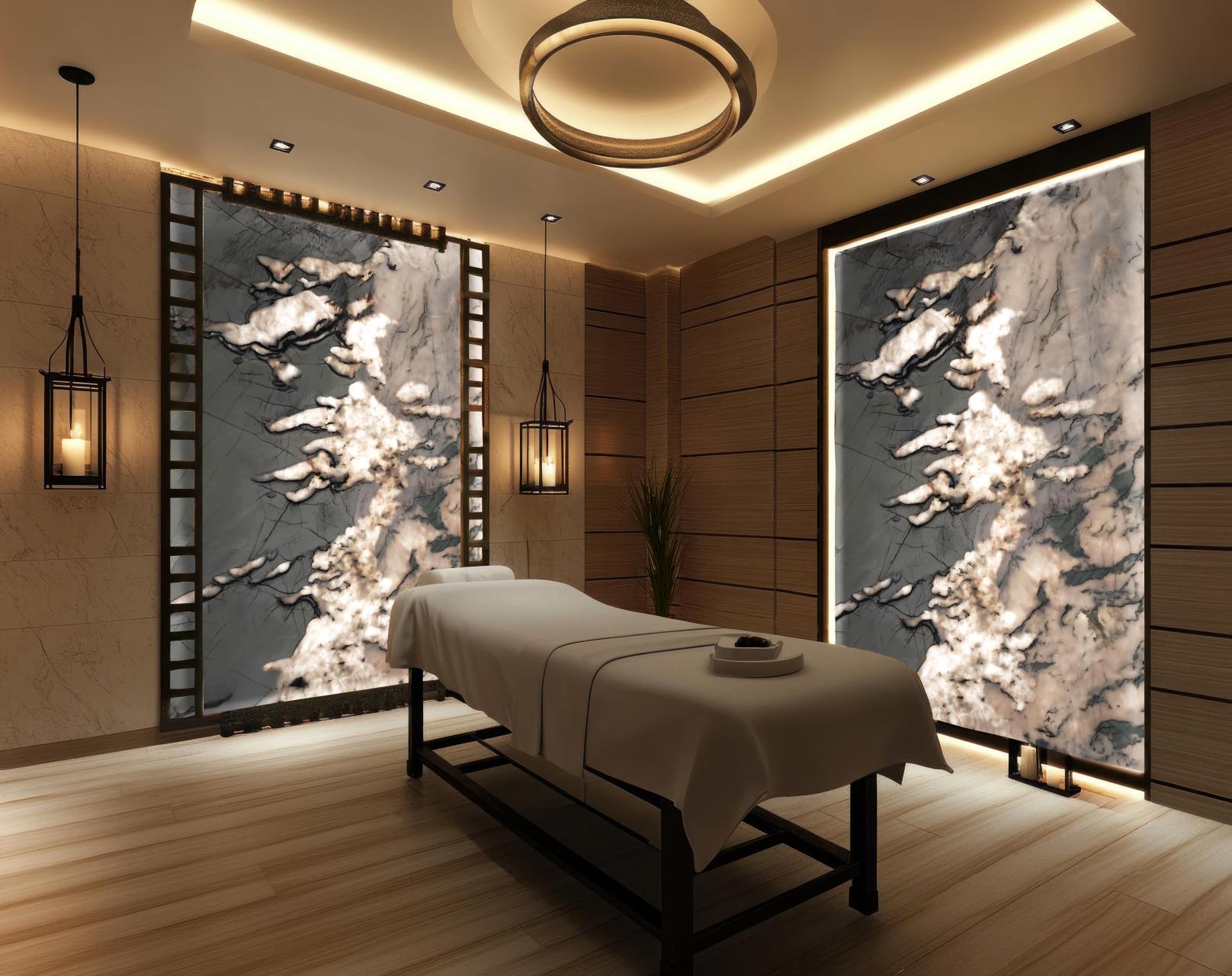
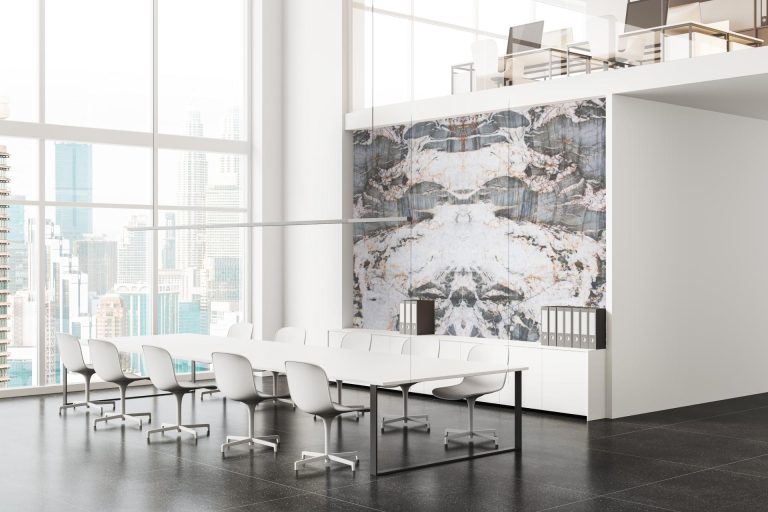
Delicate veins on a gray-blue background resemble thin branches, almost a minimalist natural design. Indeed, when properly lit, it conveys serenity and fits perfectly in spas, lounges, or reception areas.
Within the logic of neuroarchitecture, it helps bring calm and focus, uniting aesthetics and balance.
Botanic Crystal: expanding vitality
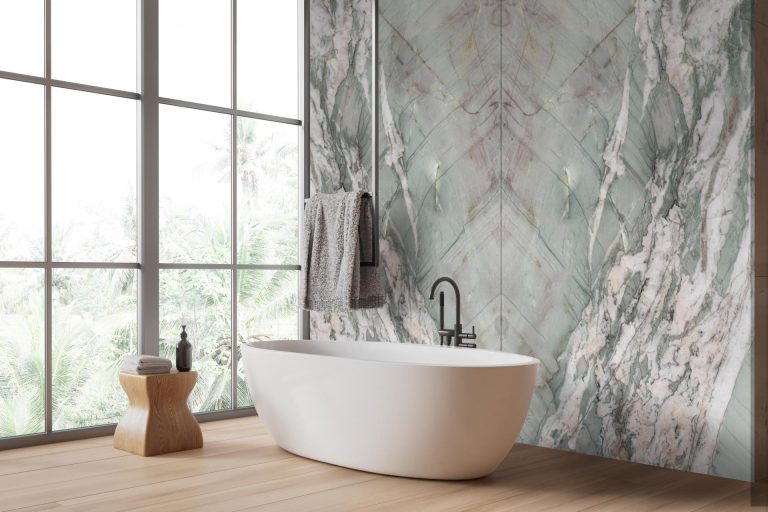
In gray-green tones, with veins reminiscent of roots, it seems to expand under the light, almost as if breathing. Like Milan's famous vertical forests, it connects with projects that integrate architecture and forest.
Additionally, in gourmet kitchens or sophisticated lobbies, it creates a visual bridge between natural vitality and built space.
Camellot: elegance in light and shadow
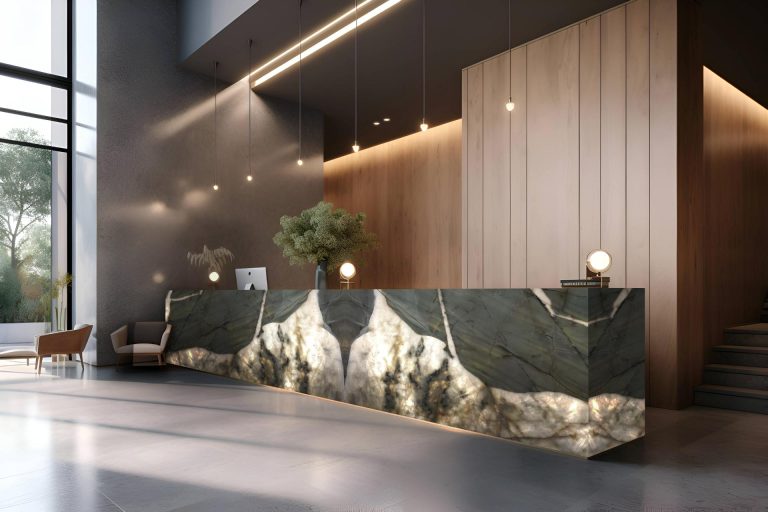
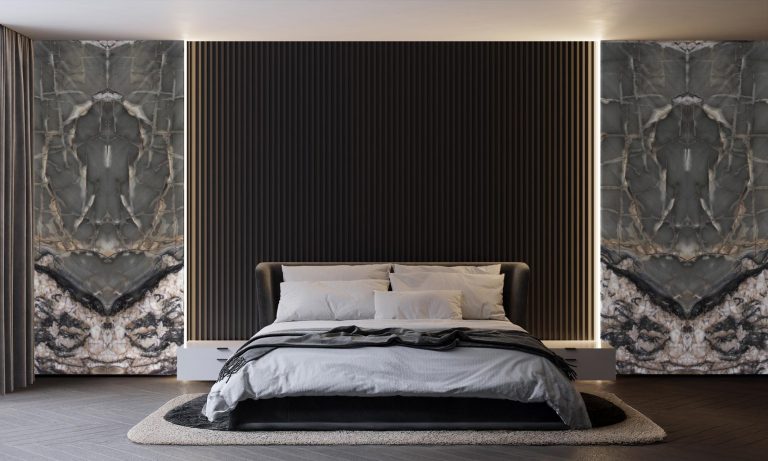
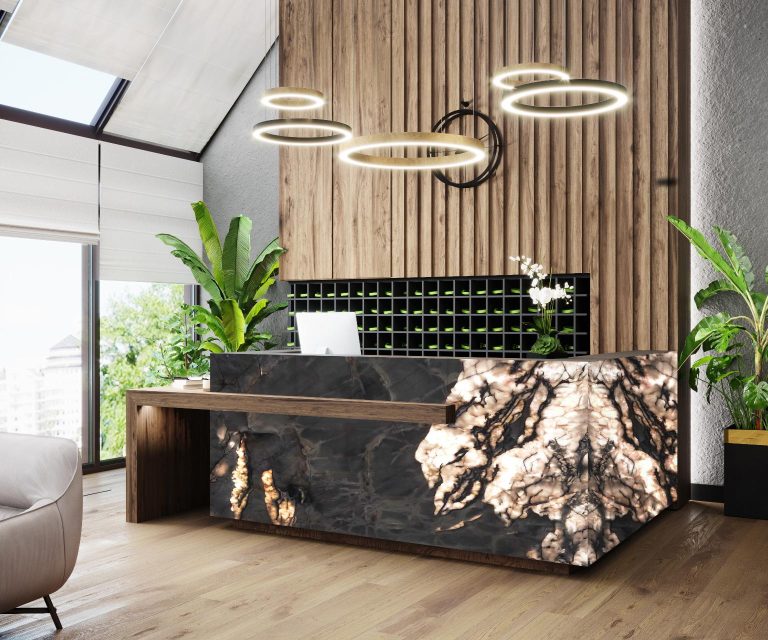
Here, intensity takes center stage. A dark base intersected by fluid white veins, like a painting in motion. As soon as the light hits it, the contrast gains strength, creating striking scenes.
Therefore, it is perfect for luxury hotels and restaurants, where sophistication and theatricality are part of the experience.
Vivaldi: geological landscape
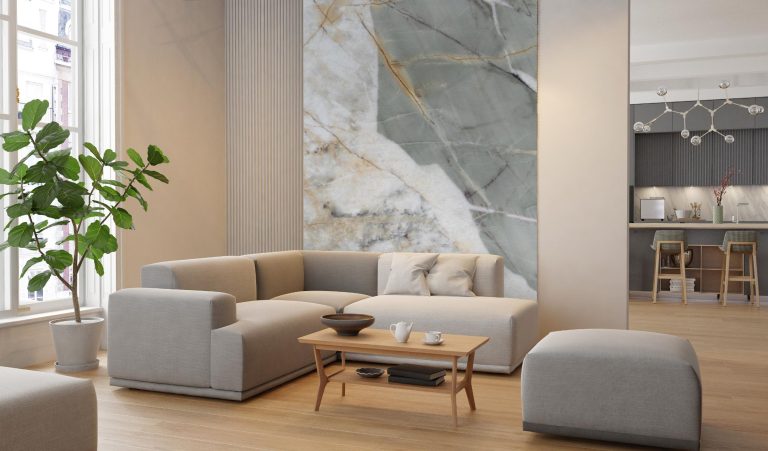
Unlike the others, it's not translucent. Its strength lies in its geology. Earthy veins, dynamic contrasts, and textures reminiscent of dry rivers and mountains.
Where biophilia takes shape
The potential of crystals truly shines when they are used creatively:
Backlit panels that transform lobbies into true works of art
Spas and lounges designed for contemplation and well-being
Gourmet kitchens and bars that combine sophistication and vitality
Luxury hotels and restaurants that explore intense contrast
Floors and countertops that bring solidity and depth to the space
Thus, more than just surfaces, crystals become creative tools for architects and designers. Similarly, for distributors, they represent strategic differentiators by combining aesthetics and inspiration.
A new chapter in biophilia
Today, biophilia is no longer limited to bringing plants into the home. Rather, it involves materials that seem to breathe with the space, carrying stories and awakening emotions.
Bonsai Crystal, Botanic Crystal, Camellot and Vivaldi demonstrate how light, geology, and design can intertwine in a single language. In short, for distributors, this means having a portfolio aligned with global trends such as wellness design, neuroarchitecture, and regenerative design.
In crystals, nature isn't just a detail. Ultimately, it's the protagonist of the space.