


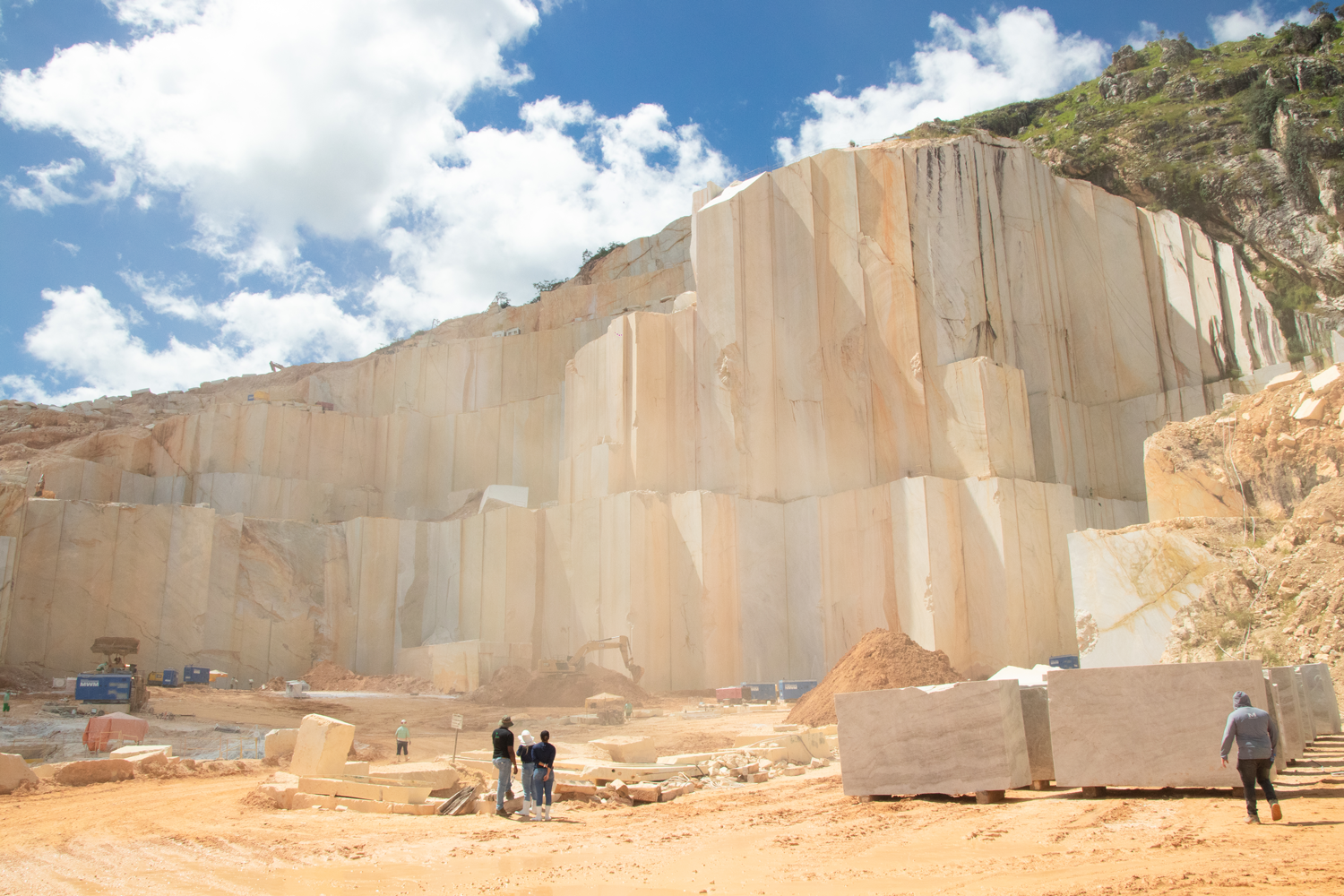
11 set Provenance of natural stone: why the origin of the material matters in luxury design.
Color, movement, finish, and performance have always been part of the choice of natural stone. But another aspect is gaining ground in high-end architecture and design: its origin.
In its analysis of the hotel industry in 2026, the Hospitality Design This points to a search for more rooted spaces, with their own identity and narratives capable of establishing a more specific relationship with the project's context.
For materials, this change broadens the conversation. Origin ceases to be merely a geographical detail and begins to help explain... what makes a material what it is.
What does provenance mean when referring to natural stone?
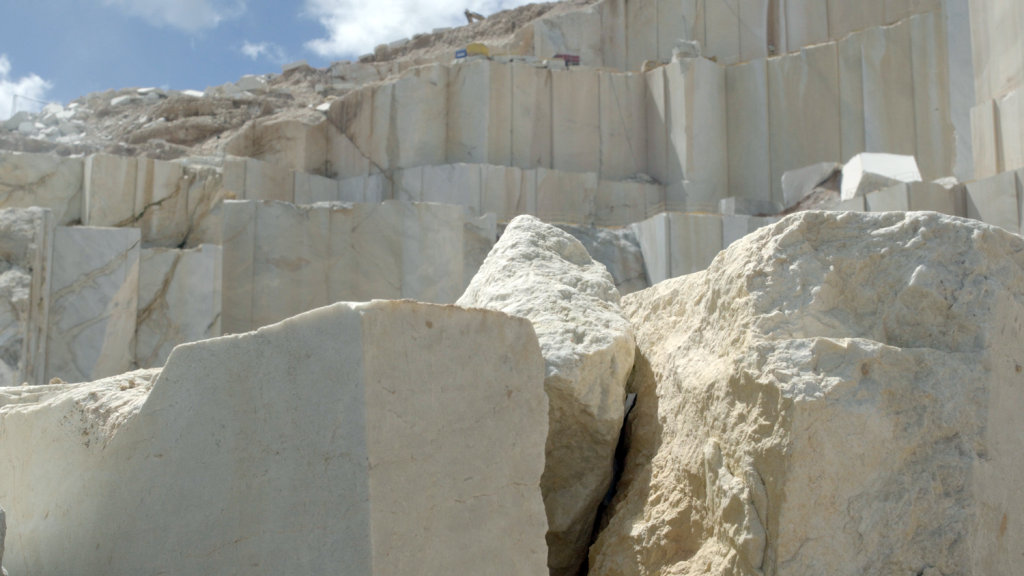
Talking about origin doesn't just mean identifying a country in the catalog.
In the case of natural stone, there is a sequence of information that connects its origin to the final result in architecture:
Quarry → geology → region → mineral composition → natural variation → transformation → project.
Each step adds a layer to the understanding of the material.
The quarry identifies a specific origin. The geology and mineral composition help explain its formation. The region adds context. The variation reveals the non-uniform nature of this process. And the beneficiation transforms the raw material into the surface that will ultimately be specified.
This relationship is also evident in how the industry itself teaches architects and designers to understand stone. Natural Stone Institute The specification includes among its fundamentals the journey of the stone from the quarry to the final installation and the relationship between formation, mineral composition, properties and applications.
Geology explains some of what we see.
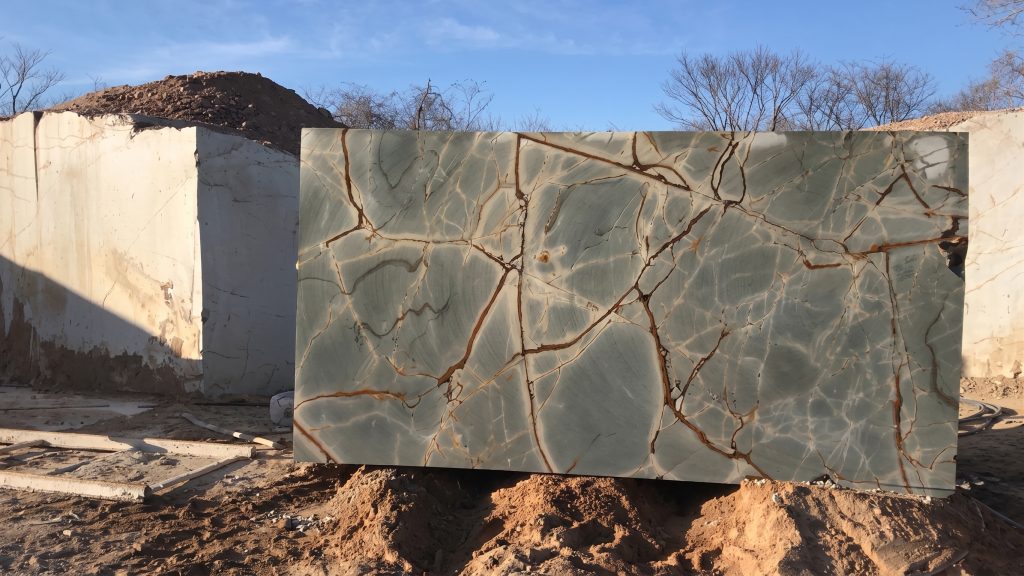
Veins, changes in hue, crystalline areas, textures, and mineral formations are typically described in design projects as aesthetic attributes.
But they weren't created as decorative elements.
These are consequences of natural processes.
In its educational content aimed at architects and designers, the Natural Stone Institute It relates geological formation and mineral composition to the fundamental properties and application possibilities of natural stone.
This knowledge changes how we read the surface.
The movement of a stone ceases to be merely a visual pattern. A mineral change ceases to be merely a variation in color. These characteristics help to reveal how that material was formed and why it has a certain appearance and behavior..
For those who specify, this relationship is also practical. Composition, properties, variation, finish, and availability need to be considered together so that the material matches the design intent and the application requirements.
When origin becomes part of the project's identity.
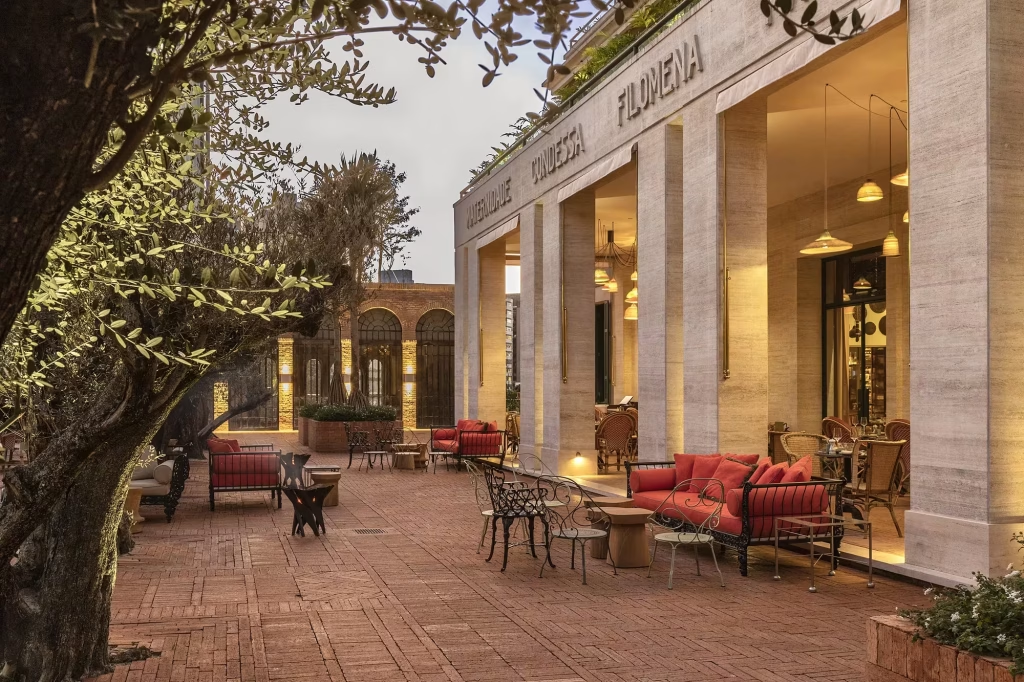
O Rosewood São Paulo This offers an interesting example of how this relationship can extend to architecture.
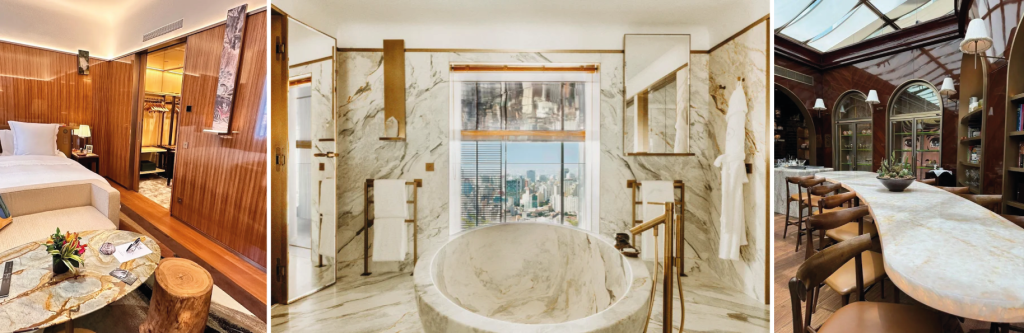
Located in the historic complex of the City MatarazzoThe hotel was designed with a strong presence of Brazilian materials, art, and references. Rosewood São Paulo It states that the project was built with Brazilian wood and marble and that much of its furniture was sourced locally, repurposed, or recycled.
Natural stone occupies an important position in this material construction. In a report about the project, the FSP It highlights the use of different Brazilian woods and stones in the spaces designed by Philippe Starck. In the bathrooms, materials such as... appear. Onyx, Palomino quartzite, and amazonite from Brazilian deposits., applied to floors, sinks and bathtubs. Some bathtubs were even carved from entire blocks of stone, instead of simply being covered.
The interest in this example lies not only in the fact that the materials are Brazilian.
It's in the way its origin contributes to the identity that the project aims to build..
Stones, woods, art, architecture, and craftsmanship are all part of a larger narrative about Brazil. In this context, knowing the provenance adds a dimension that wouldn't necessarily be reproduced simply by choosing another visually similar surface.
Stone contributes more than just color and movement. It also becomes part of the cultural and material makeup of the space.
Why Brazilian gemstone matters for luxury design.
For producing countries with great geological diversity, this change in perspective creates an important opportunity.
Brazil is a particularly significant case.
According to Geological Survey of Brazil, The country possesses one of the greatest geodiversities in the world, bringing together elements that represent different moments in the planet's geological history. The agency defines geodiversity as the variety of environments, phenomena, and geological processes responsible for the formation of landscapes, rocks, minerals, soils, and other elements of the physical environment.
This diversity helps to understand why talking about a Brazilian stone solely based on its appearance means telling only part of its story.
For architects and designers, this translates into materials capable of adding identity to the project in very distinct ways — from more restrained compositions to surfaces with a strong visual presence.
The value lies not only in the aesthetic variety. It lies in the possibility of specifying materials whose expression results from a unique geological formation, with characteristics that were not created to reproduce a particular trend or visual pattern.
This origin can enrich the project precisely because it adds a layer that goes beyond appearance.
In high-end interiors, where materiality, authenticity, and differentiation directly influence the perception of space, a stone with its own identity can contribute to making the composition more unique, more specific, and more connected to a conscious material choice.
It's not about choosing a Brazilian stone simply because it comes from Brazil.
It's about understanding. what its origin produced — its formations, variations, composition and expression — and to use these characteristics as part of the architectural intent.
It is in this relationship between geology, identity and design that the origin gains value.
The stone is no longer presented solely by what we see on the surface, but is also understood by what it explains about what we see.
And in luxury design, this difference can transform a choice of finish into a meaningful choice of material.